Anime Profile Picture: Which AI Style Actually Works
Summary
Anime profile pictures fail when you pick the wrong style, not the wrong app. Facetopia's anime catalog includes Shonen (bold, readable at any size), Shojo (soft but fragile at small scale), cyberpunk (built for dark mode interfaces), and chibi (for character personas). The right anime profile picture choice depends on your platform, face type, and whether the identity signal is intentional. Matching PFPs work best with same style and opposite color temperatures.
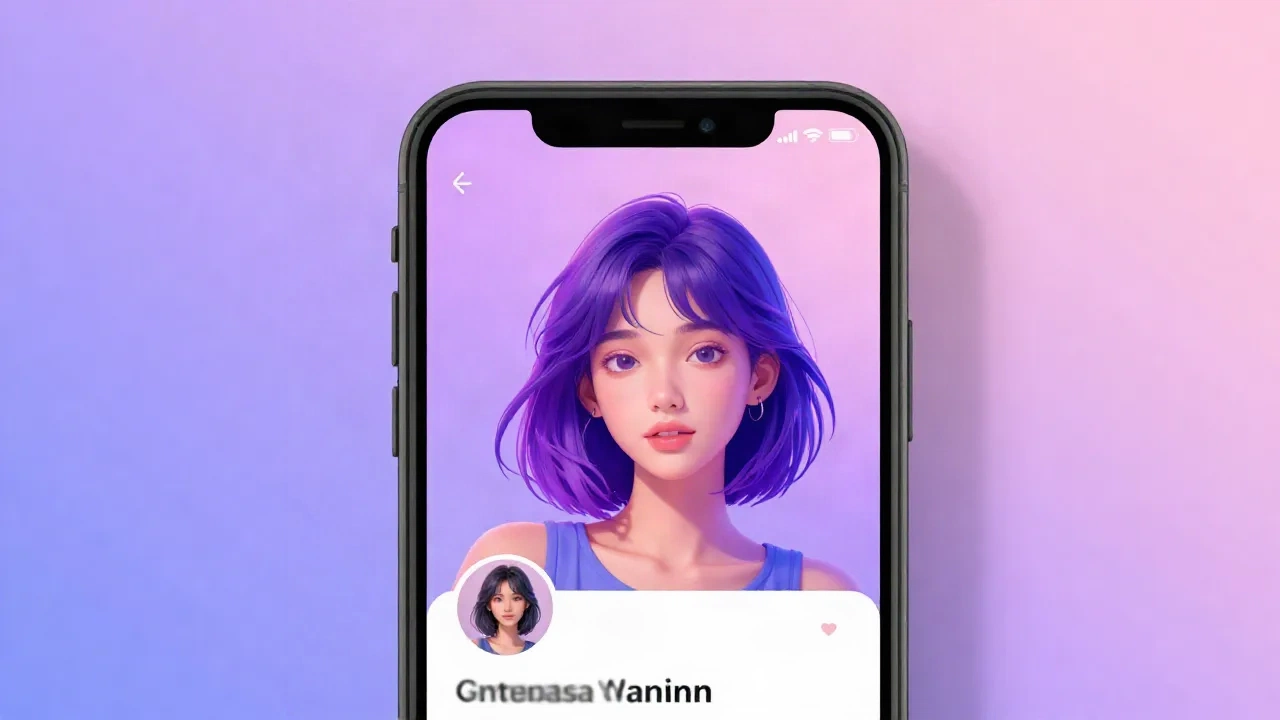
If you've uploaded your selfie into three different anime filter apps and ended up with the same flat result every time, the problem isn't the app. It's the style choice. Anime covers a wide visual range: from Shonen's bold ink lines to Shojo's watercolor softness to cyberpunk neon glow. Most anime profile picture generators default to something in the middle that ends up looking like nothing in particular. Picking the right style for your face, your platform, and your actual online identity is where the real decision lives.
Facetopia has 180+ transformation styles, including several distinct anime options that behave very differently from each other. Here's what actually matters when you're turning your selfie into an anime PFP that holds up at real-world profile picture size across Discord, TikTok, Instagram, and everywhere else.
The App Is Not the Decision, the Style Is
Every guide about anime PFPs lists the same tools and tells you to try them all.
The thing is: the difference between apps is smaller than the difference between picking the right style versus the wrong one in the same app. A Shojo filter on a strong angular face looks disconnected. A cyberpunk edge-lit style applied to a busy background selfie looks like a glitchy mess. A chibi filter used as a main profile picture on a professional Discord reads as "I found this feature yesterday."
The decision that matters is style-first, app-second.
The guides that just list "best anime PFP apps" skip this entirely. They're writing for clicks, not for your actual profile. So here's the breakdown that actually helps.
What's Actually in Facetopia's Anime Catalog
At time of writing (September 2026), Facetopia's anime-adjacent styles break down into five main aesthetics:
Shonen-style: bold ink lines, high contrast, expressive eyes, no softening of features. Works best on faces with defined bone structure. Holds up at thumbnail size (40-60px on a feed) because the thick lines survive image compression. Reads confident and direct on any platform. The most versatile of the bunch.
Shojo-style: softer ink, pastel wash, slightly enlarged luminous eyes, detailed shine in the hair. The most "classic anime" look. Works on almost any face type but can look blurry at small sizes if the palette is too soft throughout. The fix: make sure there's enough hair-to-background contrast in the output before you set it as your PFP.
Cyberpunk / Sci-fi: neon edge lighting, dark background, metallic hair detail, stylized visor or accessory elements. The most visually distinctive option. The dark background plus glowing highlights combination is built for dark mode interfaces, which is most of them in 2026. Reads clearly even at 40px circle on Discord, Reddit, or Twitter/X.
Chibi: oversized head, simplified features, soft colors. Unmistakably cute but not right for most people as their main profile picture. The context it works in: a secondary account, a community moderation role, a gaming persona where "character" is the explicit identity you're building. It's a deliberate choice, not a default.
Soft sketch / pencil: minimal color, hand-drawn energy, low saturation. Looks great at full size. The problem is that on dark mode interfaces the low-contrast output can look washed out at profile picture scale. Best for Discord where larger server profile sizes show off the detail.
Honest input note before you pick any of them: the quality of your selfie caps your output. A blurry gym shot or dark concert photo will generate a worse result regardless of style. Well-lit, front-facing, minimum 720px resolution is the baseline for any AI portrait model, Facetopia included. The output quality ceiling is set by what you give it.
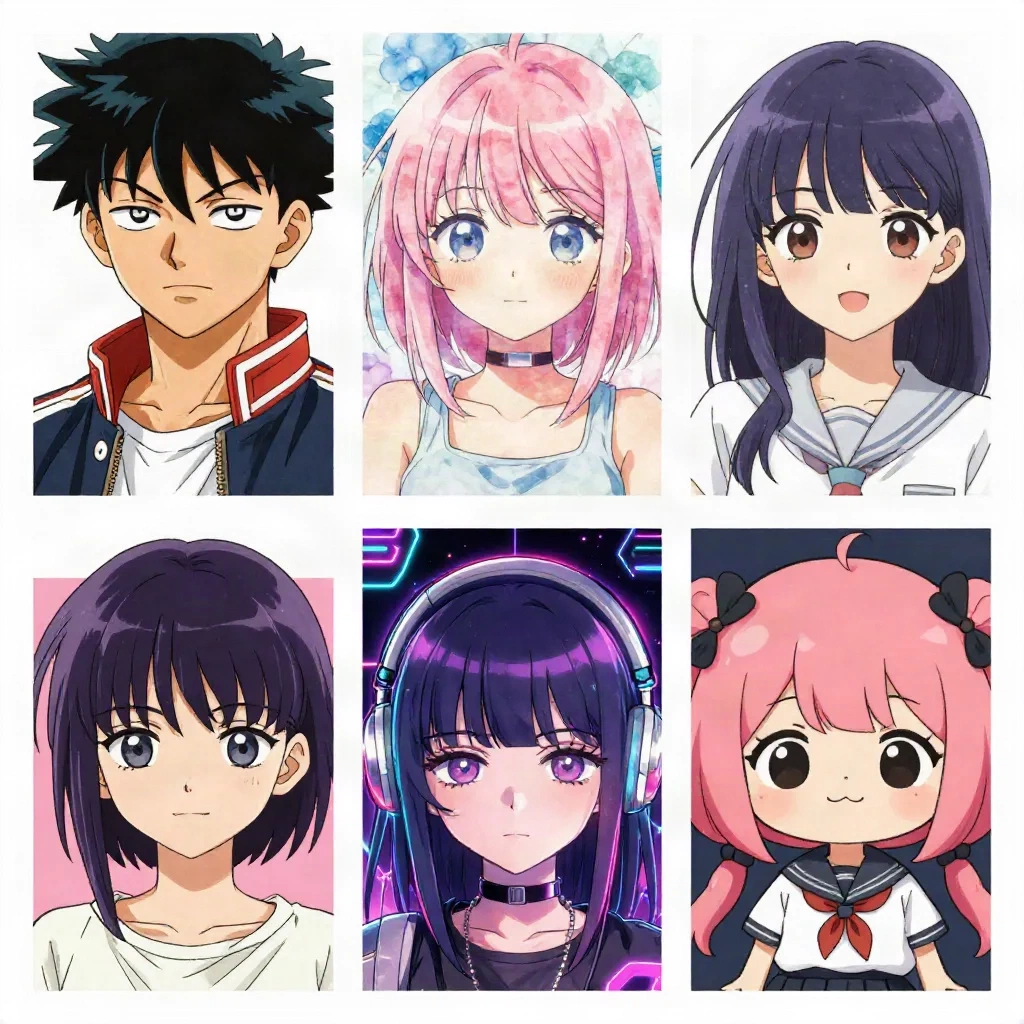
How Each Style Actually Reads at Profile Picture Size
This is the part nobody tests before committing.
A profile picture is seen at 40-60 pixels in a feed. The occasional zoom when someone taps your username. That's the real viewing condition your choice has to survive.
Shonen reads strong at any size. The thick lines and high contrast handle compression without degrading. It works on Instagram, TikTok, Discord, Twitter/X, everywhere. If you want a PFP that projects a clear personality without anyone needing to zoom in, this is the most reliable choice.
Shojo reads beautiful but fragile. Test it at actual display size before committing. Zoomed in at full resolution it can look incredible. At 40-50px on a light background it can read as a vague pastel blur. The version that works at small size has strong hair color contrast against the background, not two similar-value pastels side by side.
Cyberpunk reads distinctively. The dark background plus neon highlight is optimized for dark mode, which covers most active interfaces right now. If you spend time on Discord servers, Reddit, or TikTok in night mode, this style consistently pops the hardest out of the lineup.
Chibi is for specific contexts. If you're building a gaming persona, a sticker series, a community account, or a mod role, it's perfect. If you're using it as a main personal profile because it's the first preset Facetopia showed you, that reads differently to people landing on your account.
Facetopia vs. Lensa for Anime PFPs: The Quick Comparison
Lensa does artistic portraits well. Its Magic Avatar feature produces polished outputs in several styles including anime-adjacent ones. The differences are real but specific:
Lensa is stronger on ultra-clean, photo-realistic stylization. Its anime outputs lean toward the soft, magazine-quality Shojo spectrum. If that's the only style you want, Lensa competes closely.
Facetopia's advantage is style variety and community-forward orientation. 180+ styles including more experimental anime sub-genres (the weird ones, the Y2K-coded ones, the "this looks like a specific niche anime from 2007" ones) that Lensa doesn't offer. It also has a community feed where you can see what other people are doing with the same style on different faces, useful reference before you commit.
The tradeoff: Lensa at equivalent plan tiers tends to produce cleaner edges on the Shojo-style outputs. Facetopia goes further on the weird and the viral. Not the same objective.
The Matching PFP Trend and How to Actually Pull It Off
If you've been on TikTok or any active Discord server in the past few months, you've seen this: two people using coordinated anime PFPs, same art style, complementary color palettes, sometimes from the same fictional universe.
The Quintessential Quintuplets pair PFP wave was early 2026. What's happening now is more self-generated: two people upload their own selfies, pick the same Facetopia style, and choose color outputs that read as a visual pair.
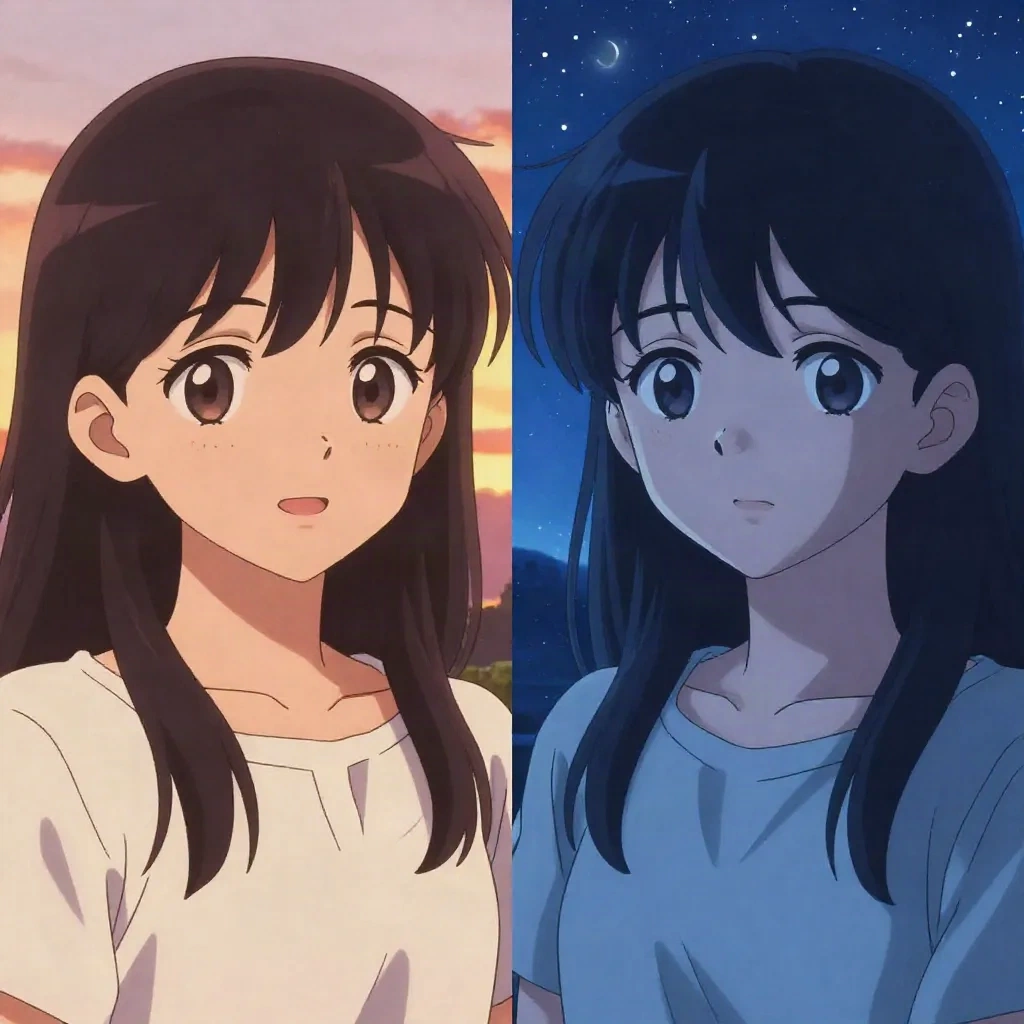
What actually works: same style, opposite color temperatures. One warm (sunset-orange hair, golden tones), one cool (navy hair, silver tones). The contrast signals "pair" without making them look like duplicates.
What doesn't work: completely different styles unless the mismatch is the deliberate joke. Shonen plus Chibi on a serious coordination attempt reads accidental.
The reason coordinated PFPs have traction beyond trend moment: they signal intentionality. A Discord moderation team with matching anime avatars reads as a consistent brand. Two creators who stitch each other's TikToks with visually coherent PFPs get saved more. It's not just aesthetic, it communicates that the people behind the accounts care about presentation, which makes people take the account more seriously.
What Most AI Anime Profile Pictures Get Wrong
The most common failure is choosing a style that doesn't survive compression. Highly detailed mid-saturation styles with fine hair texture look great at full export size and unreadable as a 60px circle on Instagram or Discord.
The second failure: an anime PFP that clashes with the rest of your content aesthetic. If your feed is real selfies and your profile picture is a stylized anime version of you, that disconnect reads in one of two ways, intentional ironic distance (works when it's deliberate and consistent) or "I found an AI filter last week and forgot about it" (reads like you don't care about your profile).
Skip the anime PFP if: you're actively building a creator brand around your real face and your audience recognizes you. Switching to an anime avatar mid-career can drop recognition faster than expected, especially if you're building via TikTok or YouTube where face-to-content connection matters.
Worth doing if: you're building a character identity, a gaming persona, a community account, or you want the profile itself to signal "I'm part of this culture" without writing it in your bio.
One honest friction: Facetopia's free plan gives you 10 transforms per day at standard resolution. That's enough for testing. If you're using the anime PFP as a permanent identity, cropped for different platforms, scaled up for banners, used in thumbnails, the Pro plan at $6/month produces higher-resolution output. The difference shows up at retina display sizes.
Which Profile Is Your Anime PFP Actually For
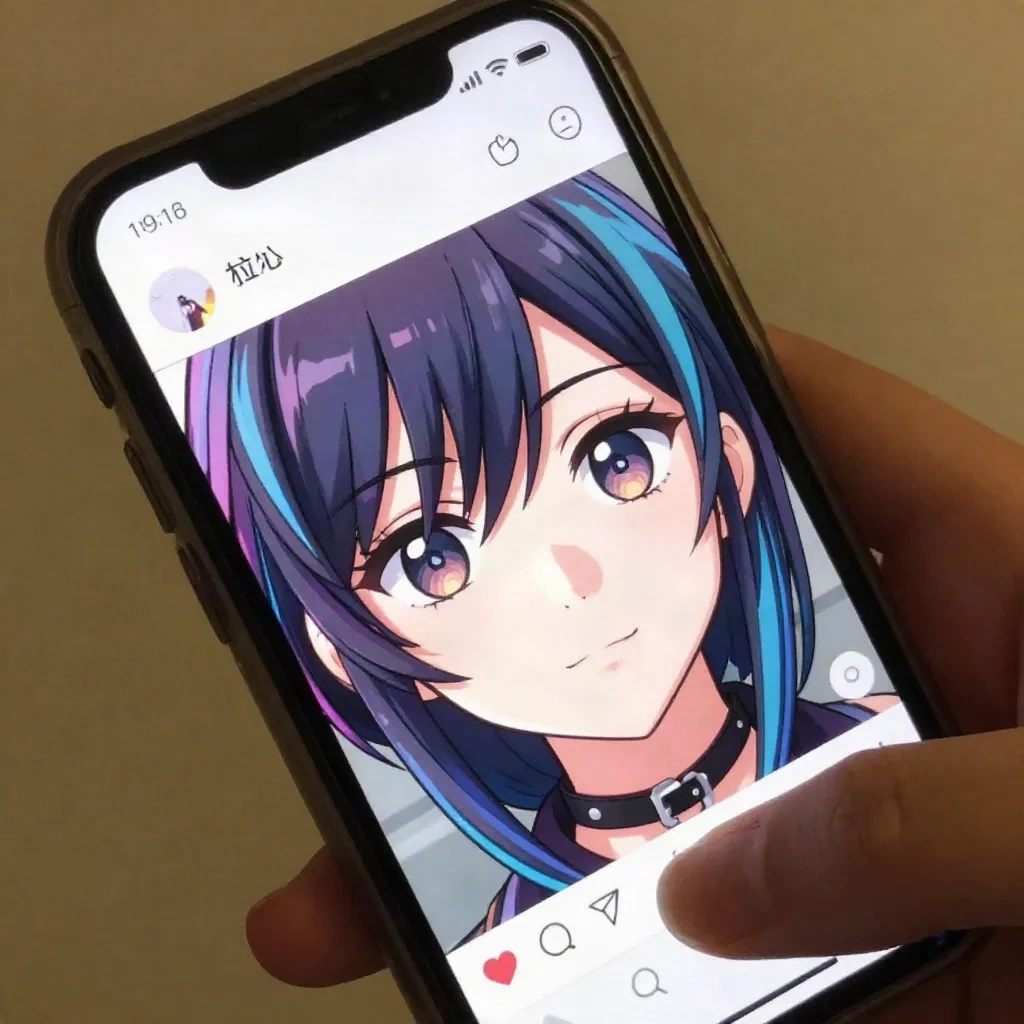
Works well: Discord, Reddit, Twitter/X, Twitch, gaming platforms, TikTok secondary accounts. Any space where stylized personas are expected or where the community already leans anime and creator culture.
Riskier: LinkedIn, your main Instagram if your identity there is photo-based, any professional presence built around face recognition. Not because anime is wrong in those contexts, because the mismatch signal can confuse people encountering you for the first time.
An underrated use case: community accounts and collective handles. If you manage a shared channel, a moderation profile, or a brand account that isn't tied to a single person's face, an anime PFP immediately removes the "is this a real person or a brand?" ambiguity. The stylization says persona, which is exactly the right signal for a role-based account.
An anime profile picture is not a neutral aesthetic choice. It communicates something about how you relate to internet culture, to identity play, to the whole filter-as-self-expression thing that's been building since AI portrait tools went mainstream. When that signal is intentional and consistent with the rest of your profile, it lands. When it's a leftover from testing an app three weeks ago, it reads like exactly that.
The three things that determine whether your anime PFP actually works: input quality, style choice matched to platform, and whether it's consistent with the identity you're building everywhere else. The app matters less than any of them.