AI UGC Agency Tools: What They Actually Replace in 2026
Summary
An AI UGC agency generates talking-head ad videos with AI actors instead of real creators, at roughly 11 to 22 dollars a video versus 150 to 2,000 for a human. It wins on volume and speed for digital products, but only 15% of consumers trust AI creators, so skincare, supplements, and high-ticket purchases still convert better with real people on camera.
An AI UGC agency is a service (or a subscription tool acting like one) that generates talking-head ad videos with synthetic actors instead of paying real creators to film them. You upload a script, pick a face from a library, and get a video that looks like the testimonial ads flooding your For You Page, minus the human on the other end. Brands are using them to test dozens of ad variants a week for what one creator used to cost.
That's the pitch. Whether it holds up depends entirely on what you're selling and who's watching.
What an AI UGC agency actually sells you
Strip away the branding and it's usually one of two things. Either a tool like Arcads, where you write a script, pick from a library of AI actors, and export a video in minutes. Or an actual agency that runs that same kind of tool on your behalf, packages it with editing and ad copy, and bills you for the service layer on top.
Neither is filming anything. There's no camera, no ring light, no creator reading your product off a card taped to their laptop. The "actor" is trained on real human footage, but the specific video never happened.
That distinction matters more than the marketing decks make it sound. It's the difference between "a creator tried your serum" and "software generated a face saying they tried your serum." Viewers can't always tell. Some can.
The maths that's pulling brands away from creators
Here's why brands are testing this anyway. A real creator runs $150 to $500 a video at a normal rate, more like $800 to $2,000 for someone with a following worth paying for. Add usage rights if you want to run it as a paid ad and not just a organic post, and you're paying 30 to 50% more, sometimes up to 150% for rights that never expire.
AI tools like Arcads run closer to $11 to $22 a video once you're on a plan, per one detailed breakdown of Arcads pricing and limitations. Testing 30 ad variants a month costs about $9,000 with human creators. The same 30 with AI actors comes in under $600.
Turnaround is the other half of it. A creator brief, film, edit, and deliver cycle takes 10 to 21 days. An AI actor video takes minutes. If you're running paid ads and need to know by Thursday whether a hook works, that speed difference is the whole argument.
Hook rate is the number these teams actually watch, more than "does it look real." A solid hook lands around 28% on Meta, 33% on TikTok, 22% on YouTube, with the top 10% climbing into the mid-40s to mid-50s. Completion rate hovers near 18% on Meta and 24% on TikTok. None of that splits cleanly by AI-versus-human. Which is kind of the point: at the testing stage, the algorithm doesn't care who's talking, it cares whether you stopped scrolling in the first two seconds.
What still needs an actual human
Here's the honest limit nobody selling you an AI UGC agency wants to lead with: only 15% of consumers say they trust AI-generated creators, according to comparative data on AI UGC versus real creator performance. Click-through rates for AI videos land around 85 to 110% of what a real creator video pulls. Close, not equal.
The gap widens hard in categories where trust does the converting: skincare, supplements, anything over roughly $100, anything where the buyer needs to believe a real body reacted to the product. An AI actor can say "this cleared up my skin in two weeks." It can't hold a bottle at an angle that shows genuine wear on the cap, or glance off-camera the way someone actually improvising does.
Physical demonstration is the other wall. AI actors are trained on faces and speech, not on convincingly manipulating a real object in their hands. Reviewers testing Arcads specifically flag it as built for digital products, courses, SaaS, coaching, newsletters, and weaker once you need someone to actually unbox, apply, or use a physical thing on camera.
So the honest read: AI UGC tools are strong for volume testing and digital products. They're shaky for anything that leans on physical trust.
Can you actually tell, scrolling on your phone
Sometimes. That's the uncomfortable answer. One reviewer testing Arcads described one actor's voice as sounding "ever so slightly like an AI," while another performer in the same library was convincing enough that they couldn't place it as synthetic at all. It's not consistent across the whole library, which means the tell isn't the technology, it's which specific face and voice pairing you happened to land on.
The comments section is usually where it surfaces first. A slightly-off blink rate, a sentence that resolves a little too cleanly, a hand gesture that doesn't quite match the words. Most viewers scroll past without clocking it consciously. Enough notice that brands running these at scale are starting to mix AI actor spots with real creator content in the same feed, so the account doesn't read as fully synthetic.
The disclosure rule nobody's covering yet
New York passed a law, effective June 2026, requiring clear disclosure when an ad uses a synthetic performer instead of a real one. It's the first state to force it, and it won't be the last. If you're a brand running AI actor ads at scale, "just don't mention it" is no longer a safe default in every market you might target.
For creators reading this wondering if AI actors are about to make disclosure irrelevant everywhere: no. It's about to make it a legal requirement in more places, not fewer.
If you're the creator, not the brand
This is the part most "AI UGC agency" roundups skip, because they're written for media buyers, not for the person who used to get the $200 brief. If you've ever done UGC as a side income, an AI UGC agency is the thing quietly competing with you for the exact same brand budget line.
The realistic read: it's not replacing you everywhere at once. It's replacing the bottom of the market first, the quick $50 to $150 talking-head spots for digital products and low-stakes brands testing volume. Higher-trust categories, physical products, anything where a brand needs a real person's face and following attached to the claim, still books humans.
If you're curious what you're actually up against, worth testing the tools yourself rather than just reading about them. Some creators are using Arcads-style tools to storyboard and pre-test hooks before filming the real version themselves, which cuts their own production time without cutting themselves out of the shot.
There's also a pitch angle in here most creators aren't using yet. If a brand's whole reason for testing AI actors is the 15% trust gap, "real person, real following, real reaction" is exactly the thing you're still selling that the software can't. Lead with that in a pitch instead of competing on price, because you will lose that fight against an $11 video every single time.
Which tools show up under the "AI UGC agency" label
A handful of names keep coming up when people search this, and they're not interchangeable.
Arcads is the one built specifically for AI actor UGC ads: 300+ trained actors, filter by age, gender, skin tone, and setting, text-to-speech or speech-to-speech. Starter plan runs about $110/month for 10 videos. No built-in editing, you still export to something like CapCut to finish it.
HeyGen leans more avatar-and-localization than pure ad-actor. Useful if the same script needs to run in six languages with a consistent face across all of them, less specialized for the fast-hook, high-volume testing Arcads is built for.
CapCut isn't an AI actor tool at all, it's where the AI-generated footage actually gets finished: captions, pacing, the trims that make a video feel native to a feed instead of a stock demo reel. Most people running Arcads exports end up here anyway.
TopView takes a different entry point, turning a product URL or script directly into a multi-scene ad without you sourcing the actor separately. Faster setup, less control over which specific face says your line.
Skip it if you're selling trust, spend it if you're testing volume
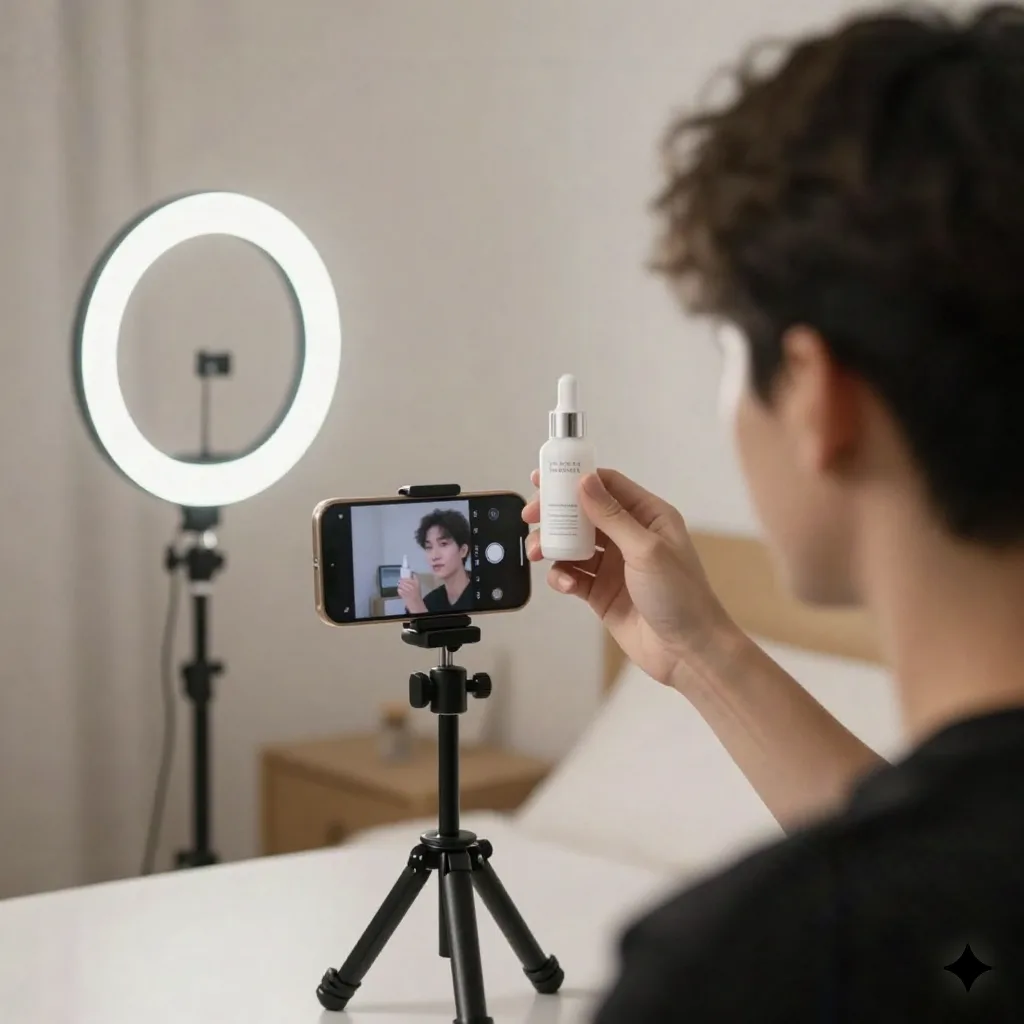
Skip an AI UGC agency if your product lives or dies on believability: supplements, skincare, anything premium-priced, anything where a buyer is specifically looking for "did this work on a real person." The 15% trust number isn't a rounding error, it's the whole category risk.
Worth it if you're testing ad hooks at volume, selling a digital product, or you need six languages of the same script without booking six separate creators. The maths works in your favor there, and the trust gap barely shows up because nobody's judging a course ad the way they judge a skincare claim.
Here's what we'd actually do with a budget right now: run AI actor videos for the top-of-funnel testing where you're finding out which hook, which angle, which three seconds actually stops the scroll. Once something wins, hand the winning script to a real creator and let them shoot the version that actually gets scaled with paid spend behind it. Roughly an 80/20 split, AI for volume, humans for the ones that prove themselves.
That's not a compromise position because AI UGC isn't "there yet." It's just what the numbers above actually support once you stop reading the sales page and start reading the CTR data next to it.